Guides
DJ services: what is included and what is not
A DJ package is a list of inclusions and exclusions, and the equipment, travel, and overtime exclusions decide whether the quoted price holds or grows.
What to take away
- A DJ services package is defined by its inclusions and exclusions. In most U.S. markets, MC service, dance floor lighting, uplighting, ceremony sound, travel and overtime are separate line items.
- Public performance is a licensing matter. A venue's ASCAP or BMI license may not cover a DJ who brings their own music and sound system.
- Ask for the certificate of insurance naming the venue as additional insured. Check the limit against what the venue's contract requires.
- Price overtime and travel as named line items with a rate. A run past midnight is a second shift for the crew.
- Confirm the authority for anything regulatedthe venue for insurance limits, the local licensing office for noise permits, the union local for casino and hotel call rules.
What a DJ package actually contains
A DJ services package is a bundle of labor, equipment and time sold as one price. Buyers compare the headline number and miss that the contents differ. Two quotes for the same wedding can be $1,200 apart because one includes an MC, a second wireless microphone and four hours of setup.
The inclusions fall into four groups. Performance labor covers the DJ and any MC. Equipment covers the sound system, microphones, mixer, controller or turntables, and the backup rig. Lighting covers dance floor wash, uplighting and effects. Time covers planning meetings and music curation. It also covers load-in, soundcheck, performance and teardown.
Each group has a cost the buyer does not see. A DJ who brings two wireless handhelds, a lapel microphone for the officiant and a spare receiver is carrying roughly $2,000 of gear to a single event. That is why the microphone count belongs in the written scope.
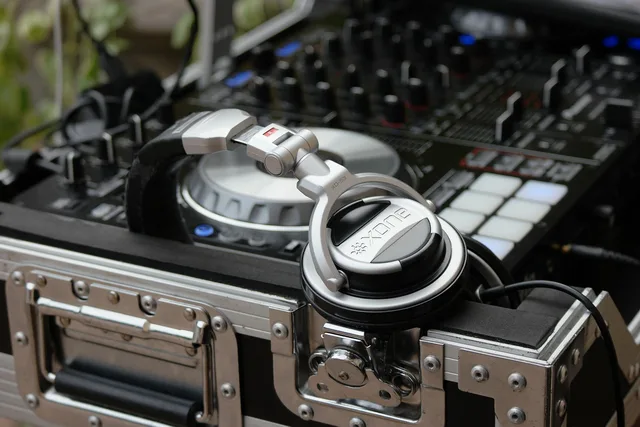
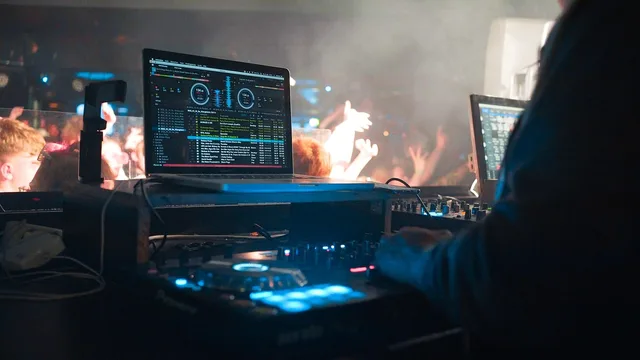
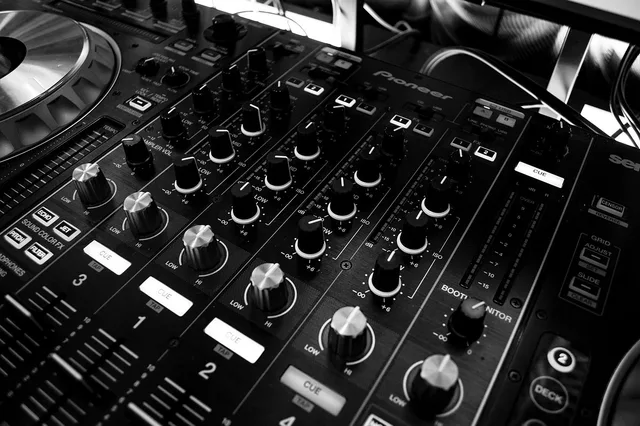
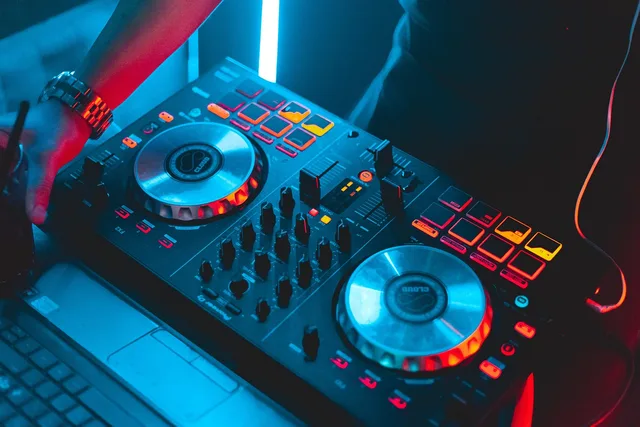
Name the gear in the scope. A basic rig often uses a Pioneer DJ DDJ-FLX4 controller, two QSC K12.2 powered speakers and a Shure SM58 wired microphone. A step-up rig often uses a Denon DJ Prime 4+ or a pair of Pioneer CDJ-3000 players with a DJM-A9 mixer. DJ software is commonly Serato DJ Pro, rekordbox or Virtual DJ.
| Inclusion | What it is | Why it sits in the package |
|---|---|---|
| DJ performance | The primary operator for the contracted hours | The core service; everything else supports it |
| MC service | Announcements, introductions, timeline calls | Often a second person, sometimes the DJ |
| Sound system | Speakers, subwoofers, mixer and amplifiers; QSC K12.2 and JBL EON715 are common mains | Sized to the room and guest count |
| Wireless microphones | Handhelds for toasts, lapel for officiant; Shure QLXD24/SM58 and Sennheiser EW 100 G4 are common | Count matters; two is not the same as four |
| Dance floor lighting | Wash, moving heads and effects; Chauvet DJ GigBAR Move and ADJ Mega Bar are common | Frequently sold as an upgrade, not standard |
| Uplighting | Battery or wired fixtures around the room; Astera AX1 and Chauvet Freedom Par are common | Almost always a separate line item |
| Music curation | Pre-event planning, do-not-play list, first dance edits | Hours of unpaid work if not priced |
| Controller or media players | DJ controller or turntables; Pioneer DJ DDJ-FLX4, Denon DJ Prime 4+ and Pioneer CDJ-3000 are common | The source players and mixer decide the setup |
| DJ software | Serato DJ Pro, rekordbox or Virtual DJ | The library and cue points live here |
| Setup and soundcheck | Load-in, positioning, line check, level set | Venue access windows control this |
| Teardown | Strike, pack, load out | Venues with hard curfews charge for overruns |
| Backup equipment | Spare mixer, cables, microphone, laptop | The difference between a show and a refund |
A package that lists only 'DJ services' leaves the buyer to guess which rows above are inside the price.
Exclusions, named
These are the items buyers assume are included and usually are not.
- Travel beyond a stated radius.Most operators quote a free radius and a per-mile rate past it. Parking, tolls and load-in distance are separate. Typical U.S. rates run $1 to $3 per mile past a 30-mile radius.
- Overtime.The rate per additional hour is usually higher than the base hourly rate. Typical U.S. overtime runs $75 to $150 per hour because the crew is past its scheduled finish.
- Ceremony sound.A separate system, a separate operator and a separate location inside the venue.
- Additional rooms or floors.Cocktail hour in one room and reception in another is two setups.
- Music licensing.The venue's public performance license may not extend to your operation. ASCAP, BMI, SESAC and GMR are the U.S. rights organizations to confirm with, along with the venue.
- Power and rigging.Generator, distro, truss and any suspended fixture. A licensed electrician or rigging inspector sets what is safe.
- Noise permits.Some cities cap decibels and require a permit. The local licensing office sets the limit, not the DJ.
- Union crew.Casino and hotel ballrooms may require a union call for load-in or rigging. The IATSE local states the rule.
The gig workflow, from inquiry to teardown
The workflow runs in a fixed order, and each stage has a document that proves it happened.
- Inquiry and qualification.Capture date, venue, guest count, hours, and whether an MC is wanted. Log the source.
- Consultation and proposal.Send a written scope with inclusions, exclusions, deposit terms and the overtime rate.
- Agreement and deposit.Signed contract and cleared deposit. The date is not held without both.
- Music planning.Client questionnaire, do-not-play list, first dance, ceremony cues, and any edits.
- Rights check.Confirm who holds the public performance license for the venue and the event type. ASCAP, BMI, SESAC and GMR are the main U.S. rights organizations.
- Equipment prep.Test the rig, pack the backup, confirm the microphone count against the scope.
- Load-in and setup.Arrive inside the venue's access window. Photograph the setup.
- Soundcheck.Line check, level set, walk the room. Confirm the MC microphone works.
- Performance and announcements.Run the timeline. Note any overrun as it happens.
- Teardown and load-out.Strike, pack, leave the space as found.
- Payment and follow-up.Collect the balance, send the review request, file the paperwork.
For the business side of this sequence, including entity setup and insurance, see the owner guide to starting a DJ business.
Roles and who does what
A solo DJ covers every role. A multi-crew operation splits them, and the split is where packages get confusing.
- DJ.Selects and mixes music, reads the room, controls the energy.
- MC.Runs announcements, introductions, toasts and the timeline. May be the DJ or a second person.
- Audio technician.Manages the sound system, monitors, wireless frequencies and the mix.
- Lighting technician.Programs and operates fixtures, uplighting and effects.
- Assistant.Loads, sets up, watches gear, handles cables and runs errands.
- Sales coordinator.Handles inquiry, proposal, contract and deposit.
- Scheduler.Assigns crew to dates and tracks the booking calendar for gaps and overruns.
Name which of these roles sit inside the package price. A quote that includes an audio technician is not comparable to one that does not.
Rights, paperwork and the authorities
Public performance is a licensing matter. The U.S. Copyright Office's study on copyright and the music marketplace explains that different uses can require different rights and licensing paths. A streaming subscription does not cover a public performance. Confirm the license holder with the venue and the rights organizations before the event. ASCAP, BMI, SESAC and GMR are the main U.S. rights organizations.
Advertising claims must be truthful and supported. The FTC's advertising FAQs for small business covers substantiation and endorsement disclosure. If a package promises 'the best wedding DJ in the city,' the claim needs evidence behind it.
Recordkeeping supports every figure in the package. The IRS guide on what records to keep covers income, expenses, assets and payroll documents. Keep the records that support the price you quoted.
Event planners define purpose, attendance, time, location and cost. They solicit bids, inspect venues and monitor delivery. The BLS occupational profile for meeting, convention and event planners describes that work. A DJ who understands the planner's constraints wins the repeat booking.
Insurance, contracts, tax positions and noise permits each have an authority. The venue sets the certificate of insurance limit. A licensed attorney reviews the contract. A CPA handles tax treatment of subcontractor DJs. The local licensing office sets noise limits and permits. The union local states call rules. Ask them, not a general guide.
Pricing the package without guessing
Do not copy another operator's price. Build the number from your own costs.
Let B be the base rate for the contracted hours. Let C be crew cost for the roles included. Let E be equipment cost per event. That cost is the gear's purchase price divided by the number of events you expect it to survive.
Let T be transport, including fuel, tolls and parking. Let L be the annual music licensing and insurance cost divided by events per year. Let W be wear and tear on cables, stands and fixtures.
The floor price is B = C + E + T + L + W, plus the margin you decide to keep. Every variable is yours to fill in. Current figures for licensing, insurance and permits come from the rights organizations, your insurer and your local licensing office.
Overtime is a separate rate, not the base rate divided by hours. Travel past the free radius is a per-mile line. Both belong on the quote template as named rows. In most U.S. markets, overtime runs $75 to $150 per hour and travel past 30 miles runs $1 to $3 per mile.
Common questions
What does a DJ package include?
A written DJ services package should name the DJ performance, MC service, sound system and wireless microphones. It should list dance floor lighting, uplighting and music curation. It should also cover setup, soundcheck, teardown and backup equipment. It should state the contracted hours, the roles included and the microphone count. If a line is missing, treat it as excluded.
What is usually excluded from a DJ package?
Travel past a stated radius, overtime, ceremony sound and additional rooms are common exclusions. Music licensing, power and rigging, noise permits and union crew are also separate. In most U.S. markets, overtime runs $75 to $150 per hour and travel past 30 miles runs $1 to $3 per mile.
Does the venue's music license cover my DJ set?
Not automatically. The venue's license may cover the venue's own use of music, and a DJ who brings their own system and library can fall outside it. Confirm with the venue and the rights organizations before the event. The U.S. Copyright Office study linked above explains why the paths differ.
What should the certificate of insurance show?
The venue usually requires a general liability certificate naming it as additional insured, with a limit stated in the venue's contract. The venue sets that limit, not the DJ. Ask the venue for the requirement in writing and give it to your insurer.
Is an MC included in a standard DJ package?
Sometimes, and that is exactly why the question matters. In many packages the DJ also MCs. In others the MC is a second person at a second rate. The written scope should name the MC role and the person filling it. If it does not, assume it is excluded.
How do I price overtime and travel?
Set a per-hour overtime rate above the base rate, and a per-mile rate past a stated free radius. Put both on the quote template as named rows so the client sees them before signing. Do not absorb them as a favour; that is how a profitable gig becomes a loss.