Guides
Reading where DJ market demand is headed, and why it matters
DJ demand in 2027 shifts toward corporate and brand work, tighter venue rules and buyers who check music licensing and insurance before they book.
What to take away
- DJ market demand is shifting toward corporate, brand and private events, now the fastest-growing slice of booked work, where buyers check paperwork as much as sound.
- Buyers now ask for a certificate of insurance and a music licensing answer before they ask for a rate.
- A streaming subscription does not cover a public performance; the venue's blanket license may not cover your set either.
- Referral channels still convert best, but they need a named owner and a follow-up date or they go quiet.
- Typical U.S. rates in 2026 run about $200 to $600 for a club night, $800 to $2,500 for a corporate event and $1,000 to $2,500 for a wedding reception.
- Price the gig after insurance, licensing, transport and gear wear, not before.
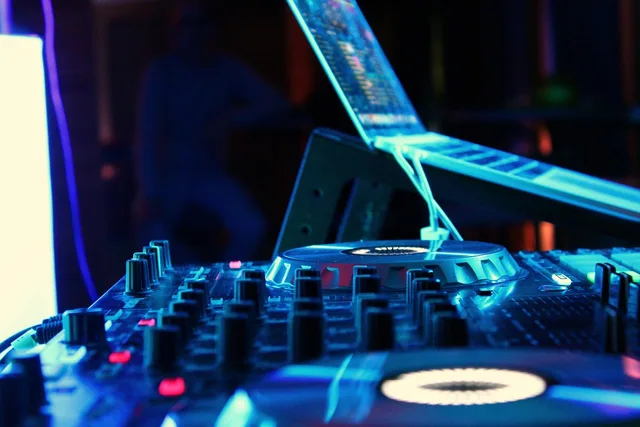
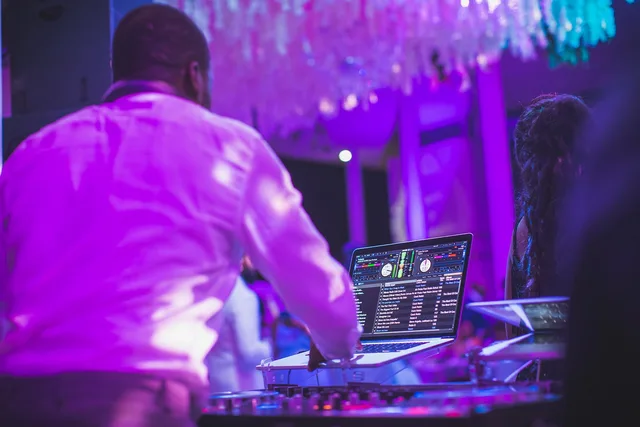
!DJ booth set up at an evening event, with a laptop, controller and lighting rig
Demand for DJs is not falling. It is moving upmarket. Bookings are shifting from open-format club nights toward corporate functions, brand activations, hotel properties and private events. Those buyers run a procurement process and a legal review before they sign.
The buyers with the largest budgets ask the most questions, so the money and the paperwork now arrive together. A promoter who books on vibe is replaced by a coordinator who books on documentation. The market-by-market breakdown shows how unevenly the shift lands across cities.
The four trends moving the work
Corporate and brand demand is growing faster than nightlife. The Bureau of Labor Statistics planner profile projects meeting, convention and event planners to grow much faster than the average occupation through 2033.
Those planners define the purpose, attendance, time, location and cost of an event, then solicit bids and inspect venues. That is a bid process, not a phone call, and it rewards DJs who can answer a written brief.
Marketplaces have followed the money. GigSalad, The Bash and Thumbtack all carry corporate and brand categories, and a complete profile with insurance and licensing answers beats a one-line listing.
Buyers check licensing before they book. The U.S. Copyright Office music licensing study sets out that public performance and other uses can run through different rights and different licensing paths.
A DJ cannot assume a streaming subscription, or the venue's own arrangement, covers the set. Name the authority here: ASCAP, BMI, SESAC, Global Music Rights or the venue's counsel, not a forum thread.
Those four organizations license venues through blanket agreements paid by the room. Licensed background services such as Soundtrack Your Brand and Mood Media cover ambient playlists, not a live set you run.
Venues are enforcing insurance limits. Hotels, casinos and city-owned spaces increasingly ask for a certificate of insurance naming them as an additional insured. ADJA publishes member guidance on limits and certificates, and the venue's own counsel sets what it will accept.
The common ask is $1 million per occurrence and $2 million aggregate in general liability, plus auto coverage if you drive to the date. Carriers writing small-vendor policies include Next Insurance, Hiscox, Thimble and K&K Insurance. Ask before you quote, because the answer changes your cost.
Casino and hotel rooms run on union call rules. IATSE locals cover stagehands and AFM locals cover musicians in union houses, including the Las Vegas Strip and Atlantic City. Call times, breaks and crew minimums come from that local's agreement. Confirm with the local before you staff the date.
The DJ workflow chain, inquiry to follow-up
Every booking runs the same chain. Gaps in it are where deposits leak.
DJ Booking Workflow Chain
- Inquiry loggeddate, venue, guest count
- Qualification callbudget, music, insurance
- Consultationroom, power, load-in, curfew
- Proposal sent with rate and terms
- Agreement signed and deposit cleared
- Music planning and rights check
- Equipment prep and backup check
- Load-in, setup, soundcheck, performance, teardown
- Inquiry loggedwith date, venue, guest count and how the buyer found you.
- Qualification callthat establishes budget range, music brief and whether the venue has insurance and licensing requirements.
- Consultationwhere you confirm the room, the power, the load-in window and the curfew.
- Proposal sentwith a rate card, deposit terms and cancellation terms in writing.
- Agreement signed and deposit clearedbefore the date is held.
- Music planning and rights checkfor any track you will play publicly or record.
- Equipment prep and backup checkthe day before, not the hour before.
- Load-in, setup, soundcheck, performance, teardown.
- Final payment, then follow-upwithin a week asking for the referral and the review.
Give one person authority over this chain and over the exceptions to it. A written DJ business plan keeps the standard steps and the exceptions visible to the whole team.
Most owner-operators run the chain in a client tool such as HoneyBook or Dubsado, or in a spreadsheet with a follow-up column. The tool matters less than the named owner.
Channels compared for DJ bookings
DJ Booking Channels Compared
Channel
- Word of mouth
- Gig leaves a result
- Venue and planner referrals
- Partner sees need first
- Google Business Profile and Thumbtack
- Reviews accumulate from every gig
- Corporate and brand direct
- Buyer has budget and brief
- Booking marketplaces
- Buyers search by date and city
- Repeat and retention offers
- Need recurs around wedding season
Fits when
- Word of mouth
- Fades if nobody asks
- Venue and planner referrals
- Partners expect something in return
- Google Business Profile and Thumbtack
- Competitors bid on same terms
- Corporate and brand direct
- Slow sales cycle, heavy paperwork
- Booking marketplaces
- Lead fees, subscriptions, price shopping
- Repeat and retention offers
- Discounts train buyers to wait
Weak point
- Word of mouth
- Venue and planner referrals
- Google Business Profile and Thumbtack
- Corporate and brand direct
- Booking marketplaces
- Repeat and retention offers
Fits a DJ business when
- Word of mouth
- Each gig leaves a result the host can point to
- Venue and planner referrals
- The partner sees the need before the host does
- Google Business Profile and Thumbtack
- Reviews accumulate from every gig
- Corporate and brand direct
- The buyer has a budget line and a brief
- Booking marketplaces such as GigSalad and The Bash
- Corporate and brand buyers search by date and city
- Repeat and retention offers
- The need recurs around wedding and graduation season
Weak point
- Word of mouth
- Fades if nobody asks for the referral
- Venue and planner referrals
- Partners expect something in return
- Google Business Profile and Thumbtack
- Competitors bid on the same terms
- Corporate and brand direct
- Slow sales cycle, heavy paperwork
- Booking marketplaces such as GigSalad and The Bash
- Lead fees, subscriptions and price shopping
- Repeat and retention offers
- Discounts train buyers to wait
Margin math you can run yourself
Start with the numbers you already know.
Typical DJ Cost Figures
- $200-$600General liability per year
- $75-$200Single-event certificate
- $20-$80Local fuel and tolls
- $150-$400Long drive with overnight
- let
Rbe the quoted rate Ithe insurance and licensing cost for the dateTtransport and lodgingWthe gear wear allowance per event- and
Sthe subcontractor or second-DJ pay.
Margin is R - (I + T + W + S). If that figure is thin, the fix is usually in I and T, not in the rate.
Typical figures for a solo DJ in a mid-size U.S. market: general liability runs about $200 to $600 a year, or $75 to $200 for a single-event certificate. The additional-insured endorsement is usually free or a small fee.
Transport runs $20 to $80 in fuel and tolls for a local date, or $150 to $400 for a long drive with an overnight. Gear wear is worth 2% to 5% of the rate, or $25 to $75 a night, for cables, stands and controller life.
A second DJ or MC costs $150 to $500 for the night. Union house calls run higher where a local sets the rate.
Subcontractor pay raises a paperwork question that varies by jurisdiction. IRS Publication 15-A and the instructions to Form 1099-NEC set the federal test; a CPA applies it to your contracts.
Common questions
Where is DJ demand heading in 2027?
Toward corporate, brand and private work in most U.S. markets, with club residencies holding in the largest cities. Expect earlier setup windows, more vendor paperwork, and buyers who want insurance and licensing answers attached to the quote.
Why does a DJ business need a certificate of insurance?
Venues and corporate buyers carry their own risk policies and want proof that a vendor can cover damage or injury. ADJA publishes member guidance on typical limits, and the venue's counsel decides what it will accept. The standard ask is $1 million per occurrence and $2 million aggregate. Ask for the requirement in writing before you quote the date.
Does the venue's music license cover my set?
Not automatically. The Copyright Office study explains that public performance can run through more than one rights path, and a venue's blanket license may not extend to every use. ASCAP, BMI, SESAC and Global Music Rights each license separately. Confirm with the rights holders or the venue before you rely on it.
How should a DJ price a corporate event differently from a club night?
Corporate work carries insurance, licensing, transport and longer setup windows that club work often does not. Build those line items into the quote rather than absorbing them into the rate. The operations and workflow guide covers how to track them per event.
What is the biggest operational risk in 2027?
Buyers who document everything meeting DJs who document nothing. The SBA business guide frames the fix as ordinary business practice: research the market, cost the work, insure it, and keep records.