Guides
Las Vegas DJ gig prep: venue questions and setup checks
A Las Vegas DJ gig prep guide to questions about labor, permits, load-in and sound, plus practical booth, cable and power checks before doors open.
What to take away
- A dj gig in Las Vegas touches four rule sets at onceunion agreements, Clark County permits, the local sound ordinance and NFPA fire codes.
- Casino and Strip work is often a union call, so call the hall before you quote the date.
- Clark County wants business licensing and, in many cases, a special event or temporary use permit before load-in.
- Decibel limits are measured on the A scale at the property line or a set distance, and the reading, not your output meter, is what counts.
- NFPA 101 and NFPA 1 drive aisle width, exit clearance and occupancy math that decide where your booth can sit.
- Paperwork and setup compliance are the two places Las Vegas gigs get called off, so keep both on one sheet.
Why Las Vegas DJ prep starts with the venue
Las Vegas packs nightclubs, wedding chapels and corporate ballrooms into a few square miles. Gig density is high, and so is the number of agencies with a say in what happens inside a room.
Who Regulates Which Vegas Venue
Strip resorts
- Jurisdiction
- Unincorporated county
- Business license
- Clark County
- Noise rules
- County Title 9
- Fire rules
- County fire dept
- House rules
- Resort-specific
Downtown venues
- Jurisdiction
- City of Las Vegas
- Business license
- City of Las Vegas
- Noise rules
- City limits
- Fire rules
- City fire dept
- House rules
- Venue-specific
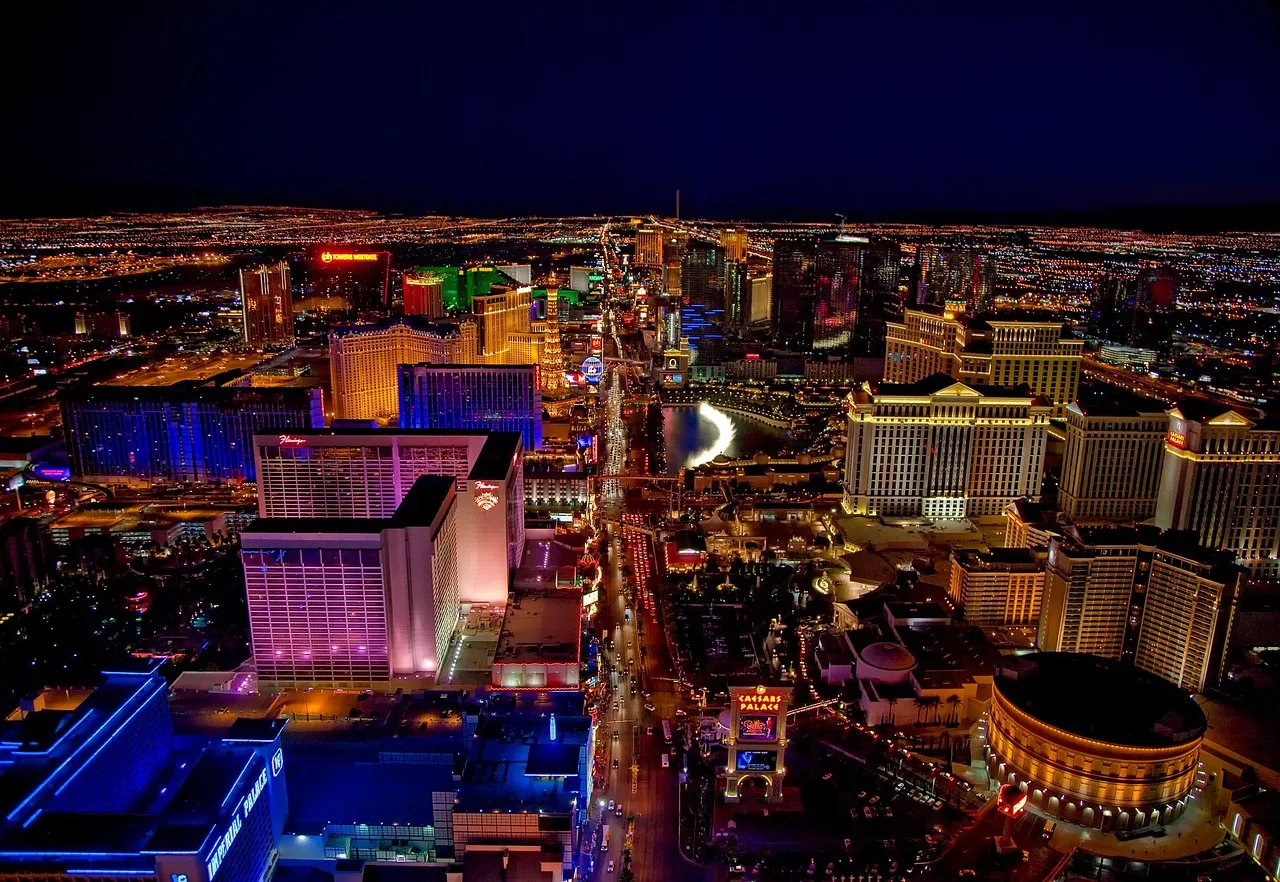
Most Strip resorts sit in unincorporated Clark County, not inside the city of Las Vegas. That means county business license, fire and noise rules apply at the big properties, while downtown venues around Fremont Street answer to the city instead.
Add a third layer on top: every resort writes its own house rules for back-of-house access, case screening and curfews. Two ballrooms in the same ownership group can run different load-in windows.
A setup accepted at one venue may not be accepted at another. Start with the venue's instructions, then confirm any permit or local-rule questions with the responsible office.
If you are building the paperwork side of the business, our notes on DJ licensing and compliance cover the general filing order before you add local layers.
Union calls: what to confirm before quoting
Before quoting, ask whether union labor applies to the specific venue and work. The venue may direct you to IATSE Local 720 for stagehand questions or Teamsters Local 631 for convention and trade show labor; confirm jurisdiction for the date rather than assuming it.
Which Union Covers Which Work
Union
- IATSE Local 720
- Rigging, lighting, audio
- Teamsters Local 631
- Convention, trade show labor
- AGVA
- Variety performers
- AFM Local 369
- Casino lounge musicians
Covers
- IATSE Local 720
- Teamsters Local 631
- AGVA
- AFM Local 369
If the booking is presented as a live music performance rather than a private DJ set, ask the venue whether AGVA, the American Guild of Variety Artists, or the American Federation of Musicians Local 369 applies. Confirm the classification and responsible contact for the specific date.
What those agreements decide is who touches what. In many rooms a house technician handles the patch into the house system and any rigging, while the DJ supplies playback, the music library and mic work.
Call terms depend on the venue, local and classification. A four-hour reception does not by itself establish the labor call; ask for the applicable minimum call length and crew count before quoting, and account for setup and strike if the venue confirms they are included.
Do not let a handshake with the planner settle it. Ask the venue's event services office whether the date is a union call, and get the answer in writing before you hold the date.
Here is a call procedure. Email the venue's event services office, not just the planner, and ask: Does union labor apply to this date, and which local has jurisdiction? What are the minimum call length and crew count? Who patches into the house system? What does the house supply, and what should you bring?
Ask for the answers in writing, from an event services email address or on venue letterhead, naming the date, the local, the classification and the call hours. Keep that reply with the signed contract. If the venue will not commit, call the business agent at the local, IATSE Local 720 or Teamsters Local 631, and ask the same questions.
For the wider business side of these calls, see DJ operations and how owners route labor questions before signing.
Permit responsibility and paperwork before load-in
Before operating, verify which business license applies to your business and location with the Clark County Department of Business License or the city of Las Vegas, as appropriate. Confirm the license name matches the name on your contract.
Permits and Paperwork Before Load-In
- Clark County business license
- Special event permit from Parks and Rec
- Temporary use permit for tents and stages
- Fire operational permit for assembly and flame
- Liquor permit via county and state
- Health district permit for food service
- Certificate of insurance naming the venue
Event permits depend on the site and activity. Potential offices to check include Clark County Parks and Recreation for county parks and grounds, the Clark County Building Department for temporary structures, and the Clark County Fire Department for fire-related operational permits. Ask the responsible office which permit, form and threshold apply to the event.
For events involving alcohol or food, ask the promoter which approvals apply, who files for them, and whether the Nevada Department of Taxation, the county business license office or the Southern Nevada Health District has a role.
Event-specific paperwork depends on the site and activity. Ask the venue or promoter to name each permit, who is filing it, and whether approval is in hand before load-in; confirm the filing status with the issuing office when needed.
Insurance is where most DJs get caught. Venues commonly ask for a certificate of insurance naming the property as additional insured, and some ask for a specific limit tied to the ballroom or pool deck.
Confirm the exact general-liability limit, certificate wording and any waiver of subrogation the venue requires before arranging coverage. Employees, pyrotechnics or liquor exposure can affect the premium.
Permit fees depend on which permits apply. Ask the promoter to identify each permit and issuing agency, then verify the current fee and filing requirements with that agency rather than budgeting from a generic range.
For a Clark County business license, check the current schedule from the Clark County Department of Business License. For event permits, ask the promoter which agency is responsible and verify each fee on that agency's schedule before quoting.
If you are unsure which licenses apply to your business structure, this guide on What licenses does a DJ business need walks through the common federal, state and local layers.
Here is the order that keeps a Las Vegas load-in smooth:
- Ask the venue or promoter which special event or temporary use permits apply, who is filing them, and whether approval is in hand before load-in.
- Send your certificate of insurance, with the resort named as additional insured if required, by the venue's deadline.
- Verify that your Clark County or city of Las Vegas business license is active and matches the name on the contract.
- Ask whether alcohol or food service adds approvals or a health district review.
- Get written confirmation of your load-in window, dock assignment and freight elevator reservation from event services.
Sound expectations and monitoring
Las Vegas sound rules depend on the venue's location and event conditions. For an unincorporated county location, ask whether Clark County Code Title 9 applies; for a city address, ask which city provision applies. Confirm the sound limit, measurement point and method with the venue or responsible authority.
Decibel Limits and Enforcement Hours
- 55-65 dBANight property-line limit in the valley
- 10 p.m.Tighter tier and enforcement start
- A-weightedMeasurement scale used at property line
Residential areas need particular care, but a broad valley-wide number is not a reliable operating limit. The applicable threshold depends on the venue's jurisdiction, district, time and any event-specific permit condition.
Do not set the rig from generic residential, commercial or industrial ranges. Before sound check, ask the venue for the limit that applies to this address and event, the code provision or permit condition behind it, and who will enforce it.
A venue inside city boundaries is subject to the city's applicable rules, while an unincorporated Clark County venue follows the county rules. Confirm the jurisdiction and ask the venue contact or relevant authority to identify the specific provision in writing.
Confirm the measurement point and method as well. If the permit names a point at a set distance from the stage or speaker array, follow it; otherwise, get the location specified by the venue or enforcing authority instead of assuming.
Ask whether the event has time-based limits or a tighter requirement after a specified hour, and record the answer. If a venue manager or code official directs a reduction, lower output and note the reading and adjustment in the event log.
Outdoor gigs carry the most risk. A pool deck on the east side of the Strip, a downtown lot near the Arts District, or a festival ground with homes across the street all put your mains within a few blocks of a complainant.
Control comes from aim and low end. Point mains along the building rather than across the lot toward housing, keep subwoofer arrays coupled and off the concrete, and high-pass the rig so the frequencies that travel farthest are the ones you trim first.
Log your levels during the event. If code enforcement or a resort manager arrives, a written record of measured output and the adjustments you made is more useful than a memory of how loud it seemed.
Fire-safety and egress checks for DJ setups
Fire and life-safety requirements for exits, aisles, occupancy and electrical safety depend on the venue and applicable rules. Ask the venue which requirements govern the room and floor plan. NFPA 101 and NFPA 1 are useful names to raise when confirming which provisions the venue relies on.
Fire Code Numbers That Shape the Floor Plan
- 36 inchesMinimum clear aisle width in assembly seating
- 300+Codes and standards venues apply to temporary gear
Ask the venue or fire official for the required clear aisle width and any exit-access limits that apply to the room and seating plan. Confirm booth placement against the approved floor plan before setup.
Ask which occupancy and egress provisions apply to the space, and keep the booth out of exit paths and required aisles. Have the venue approve the placement rather than assuming an empty or partly filled room changes the requirements.
The broader list of 300+ codes and standards covers fire and electrical safety topics venues apply to temporary equipment, cabling and power distribution.
Three things get DJs in trouble at the pre-event walk. Blocking an exit or the path to one. Running cable across a walking surface without a mat or ramp. Drawing more power from a circuit than it is rated for.
Ask the venue whether your booth, truss or cable runs affect usable floor area or posted occupancy. The venue or fire official should confirm any adjustment before doors open.
For crew safety, check which OSHA requirements and site procedures apply to lifting and electrical hazards. Confirm with the venue or production lead who is responsible for any crowd-management duties.
Working the room without tripping a violation
Compliance in Las Vegas is mostly a setup discipline. Arrive with the room plan already agreed, and the night runs on the music instead of on negotiations with security.
Use this checklist before doors open:
Pre-Doors Compliance Checklist
- Confirm permit is on site and current
- Give resort certificate of insurance
- Get contractor badge, meet union steward
- Use assigned freight elevator, keep exits clear
- Cover or ramp cables crossing walkways
- Verify draw against circuit rating
- Record measured A-weighted levels
- Confirm the load-in window, dock and freight elevator in writing from event services.
- Walk the floor plan with the venue and mark the aisles and exits you cannot block.
- Set the booth outside exit paths and keep the required aisle clearance confirmed by the venue.
- Tape or ramp every cable run that crosses a walking surface.
- Check the circuit you plan to use, and ask for a dedicated circuit if the draw is close to its rating.
- Point mains along the building and away from housing, and keep subs off the concrete and coupled.
- Ask the venue which sound limit, meter method and measurement point apply; take and log readings as directed before doors and once the room fills.
- Keep the business license, certificate of insurance and permit copies in one folder at the booth.
- Confirm with the house technician or stagehand who patches into the house system.
Keep a one page compliance checklist in your case so the same questions get asked at every venue.
A worked example shows how it fits together. A corporate party at a resort ballroom, 300 guests, house system, IATSE stagehand on the patch. You supply playback and mic work, hold a Clark County business license, carry insurance naming the resort, and keep your table out of the two marked aisles.
Even when you use the house system, ask who monitors sound, which limit applies and where readings are taken. Do not assume the system determines who is responsible for compliance.
The same night outdoors is a different job. Ask which rig, permit, sound limit, measurement point and low-end controls apply, and confirm who is responsible for each. Build a repeatable SOP checklist for both versions so the setup does not depend on memory.