Guides
DJ business startup costs: gear, licensing, insurance and transport
A DJ business startup budget, category by category: what a working rig, music licensing, liability cover, transport and registration run, plus the season math.
What to take away
Startup costs for a DJ business split into five lines: gear, licensing, insurance, transport and paperwork. The ranges below are typical for a solo DJ in a mid-size American market as of 2026.
- A working mobile rig lands between $3,000 and $8,000 new; a used controller, laptop and two powered tops can start near $1,500.
- ASCAP and BMI public-performance licenses are separate from your streaming subscription and from whatever the venue already holds.
- General liability cover of $1M per occurrence is the common venue floor, and most venues want a certificate naming them as additional insured.
- Transport, wear and backup gear are the lines that quietly eat a first-year margin, so price them into every quote.
- Confirm licensing, tax and insurance specifics with your state board, a CPA and a licensed insurance broker before you spend.
The gear line, and what it actually costs
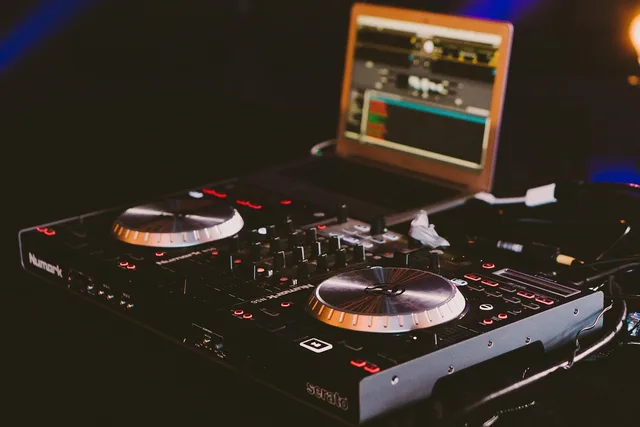
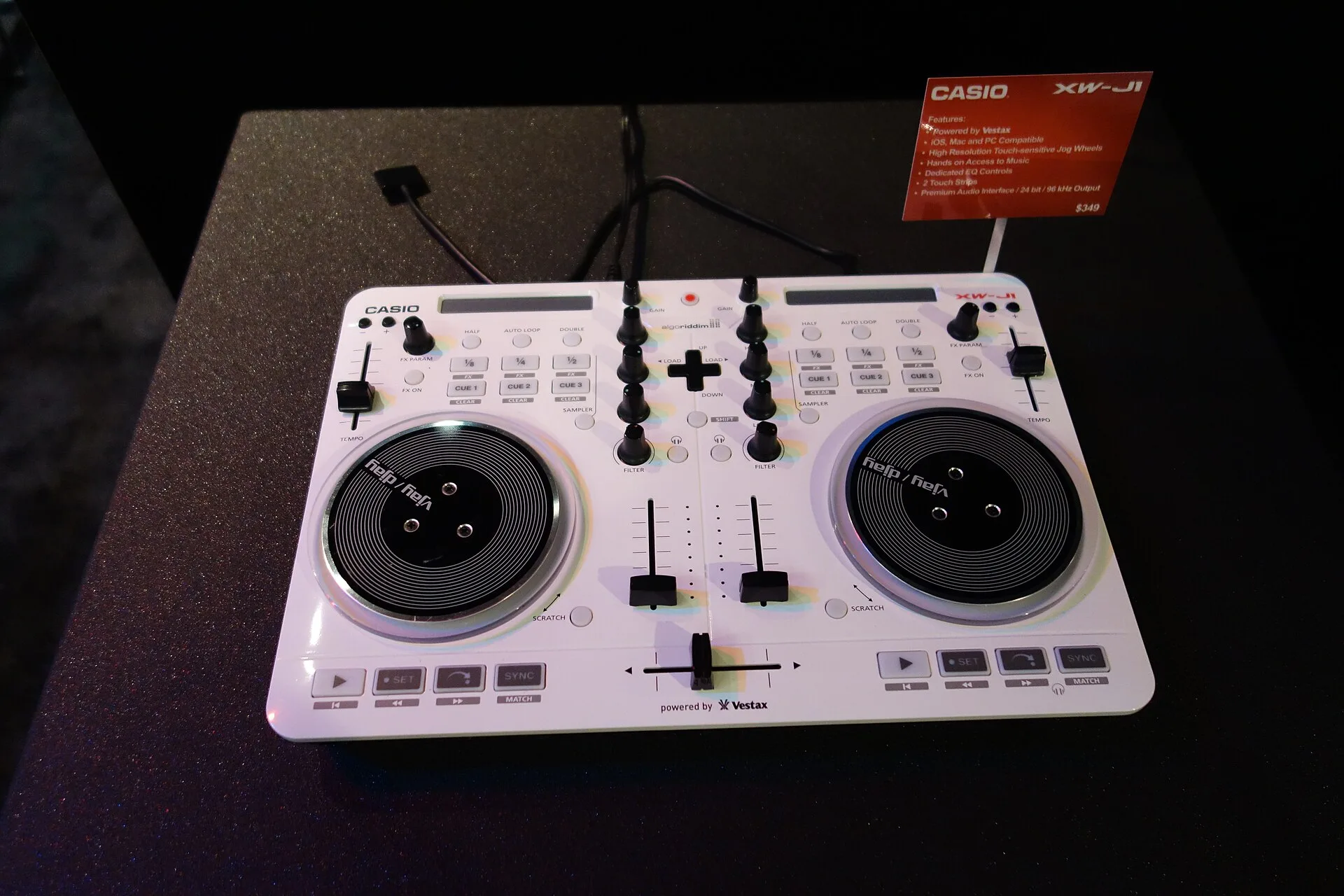
A solo DJ in a mid-size market buys used and new gear in stages. Two-channel controllers run $300 to $1,200, with the Pioneer DJ DDJ-FLX4 near the floor and the DDJ-1000SRT nearer the ceiling. A laptop built for DJ software, such as a MacBook Air or a Dell XPS 13, runs $700 to $1,500.
Powered tops and a subwoofer run $1,200 to $3,000 as a pair. The QSC K12.2 and the JBL EON615 are common powered tops, with a QSC KS112 or a JBL EON618S underneath.
Cables, stands, cases and a basic light bar add $400 to $900. Gator and Odyssey build the cases, and the Chauvet DJ GigBAR Move is a one-bar lighting option.
That puts a first working rig between $2,600 and $6,600. Add a backup controller and a spare powered speaker and you are closer to $4,000 to $8,000.
Backup gear is not optional once you are holding a deposit for someone's wedding.
Wireless microphones matter more than most new DJs expect. A pair of reliable handhelds, such as the Shure BLX24/SM58 or the Sennheiser EW-D, runs $300 to $700. Cheap ones drop out mid-toast, and that is the moment a client remembers.
Music licensing and public performance
A consumer streaming subscription does not cover a paid public performance. The U.S. Copyright Office report on music licensing sets out how public performance, reproduction and distribution are separate rights with separate licensing paths.
ASCAP and BMI are the two performing rights organizations most DJs encounter. SESAC and Global Music Rights license their own catalogues as well, so holding one license does not cover another organization's songs.
Annual fees scale with how you use music and where you play, and each organization publishes its current schedule. For a solo DJ the budget typically lands in the low hundreds of dollars a year, higher with frequent events and large rooms.
Venues often hold their own license, but that covers the venue, not your service. Ask the venue in writing which organization covers the room, and keep the answer with the event file. Your own DJ license requirements sit alongside this, not inside it.
Insurance, permits and paperwork
General liability insurance for a mobile DJ commonly starts around $400 to $900 a year for $1M per occurrence and $2M aggregate. Specialist entertainment brokers such as K&K Insurance and RV Nuccio & Associates quote these policies.
Venues usually ask for a certificate naming them as additional insured, and some ask for a specific endorsement. Equipment cover is a separate policy or rider.
A $6,000 rig insured against theft and damage typically runs $150 to $400 a year. If you subcontract DJs, confirm with your broker how they are covered before they touch your gear.
Business registration, a city business license and a seller's permit vary by state and municipality. In most markets an LLC filing runs about $50 to $500, and a city business license $25 to $200 a year.
Confirm the current requirements and fees with your state board and local licensing office. Do not assume one registration authorizes every activity.
Transport, wear and the season example
A used cargo van runs $8,000 to $20,000. Ford Transit Connect, Ram ProMaster City and Nissan NV200 are common small-van picks for a one-person rig. Fuel, insurance and maintenance on a working DJ van commonly run $400 to $800 a month.
If you drive a personal car instead, budget $0.30 to $0.60 per mile for wear, fuel and tires.
Wedding and graduation season is where the arithmetic bites. Take a DJ holding four Saturdays a month at a $1,200 rate card from May to September. That is $24,000 gross across the season.
Subtract licensing, insurance, fuel, a replacement cable and one blown speaker, and the net is what funds the quiet months.
The SBA business guide breaks startup planning into market research, costs, permits, insurance and finance. Work the same list for a DJ business and the season math gets honest fast.
Where the money goes, line by line
Where the money goes
| Line | Typical first-year range | Notes |
|---|---|---|
| Controller and laptop | $1,000 to $2,700 | Pioneer DJ DDJ-FLX4 or DDJ-1000SRT; used cuts this hard |
| Powered speakers and sub | $1,200 to $3,000 | QSC K12.2 or JBL EON615 with a QSC KS112; buy once, buy powered |
| Cables, stands, cases, lights | $400 to $900 | Gator cases, Chauvet GigBAR Move; the line everyone forgets |
| Wireless microphones | $300 to $700 | Shure BLX24/SM58 or Sennheiser EW-D; two handhelds minimum |
| Backup controller and speaker | $800 to $1,500 | Non-negotiable once deposits land |
| ASCAP and BMI licenses | Low hundreds per year | Published annually by each; SESAC and Global Music Rights are separate |
| General liability | $400 to $900 per year | $1M per occurrence typical |
| Equipment cover | $150 to $400 per year | Theft and damage |
| Registration and permits | $75 to $700 first year | LLC filing plus city license; varies by state and city |
| Van, fuel and maintenance | $400 to $800 per month | Used van $8,000 to $20,000; or mileage on a personal car |
The IRS starting a business guide covers structure, tax IDs and recordkeeping. Ask a CPA how subcontractor DJs are treated on your return, and keep every receipt from day one.
Booking the season without overrunning
Peak Saturdays collide. Two inquiries land for the same date, and the second one is worth more. A booking calendar that tracks holds and deposits stops that becoming a refund conversation.
Track three numbers each month: inquiries that convert, average event value, and days between deposit and final payment. Those three tell you whether the season paid for the gear or just kept you busy.
Common questions
Do I need both ASCAP and BMI licenses?
They license separate catalogues, so holding one does not cover music the other controls. SESAC and Global Music Rights hold their own catalogues as well. Check which organization covers the venue's room and which covers your service, then confirm with each organization directly.
Is a streaming subscription enough for a paid gig?
No. A consumer subscription covers personal listening, not public performance. The Copyright Office report linked above explains how performance, reproduction and distribution are licensed separately.
How much should I hold back for gear failure?
A spare controller, a spare powered speaker and a cable kit cover most mid-event failures. That is the $800 to $1,500 backup line above, and it is cheaper than a refund.
Does the venue's insurance cover me?
It covers the venue. Your own general liability policy is what protects you, and venues usually want a certificate naming them as additional insured. Confirm the exact wording with your broker.