Guides
Owning a DJ startup: the guide most business plans skip
A DJ startup plan holds up when it names the rate card, the music license, the gear backup and the venue rules that decide whether a night pays.
What to take away
- Price the night, not the houra DJ startup builds a rate card by market, then adds overtime, travel, and a second system as separate line items.
- Music use splits into at least two rights. A streaming subscription covers none of them for a paid public performance.
- Carry liability cover at the limit the venue asks for, and keep the certificate on file before load-in day.
- Every rig needs a named backup for the controller, the laptop, the cables, and the power path.
- Keep the booking calendar and the money in the same system, so a gap or an overrun shows up before the month closes.
A DJ business is a live-audio business with a calendar attached. The plan that matters is the one you can check against a signed booking, a load-in time, and a bank statement.
The DJ startup guide below walks the operational spine of the business: the entity and registrations, the rate card, music rights, venue paperwork, noise and power, gear backup, and the money under every booking. Where someone else sets the rule — your state's business filing office, the city licensing office, a performing rights organization, the venue's insurer, or the local union — it names who decides and what they ask you for.
Startup sequence, in order
- Choose the entity. A sole proprietorship needs no filing. An LLC or corporation files with your state business office, usually the Secretary of State: articles of organization for an LLC, articles of incorporation for a corporation. Filing fees typically run $50 to $500 depending on the state.
- Get an employer identification number from the IRS. It is free online and takes minutes, even with no employees.
- Open a business bank account and a card for gear only.
- Buy general liability insurance before the first paid gig, at the limit your venues ask for. Ask for the certificate as a PDF you can email.
- Register locallythe city clerk or the county business licensing office issues the business license, and your state department of revenue issues the sales tax permit if your state taxes admissions or rentals.
- Book the first paid date. A private party or a weeknight bar residency is the usual entry point. Signed contract, deposit, certificate on file.
Build the rate card before the first quote
A rate card is a list of prices for named situations, not a single number. Split it by market and by night of the week, because a Saturday wedding in New York and a Tuesday bar residency in Austin do not share a cost base.
Rate card line items
- Base performanceset hours on site
- Overtimeeach block past contracted end
- Travelmiles beyond local radius
- Second systemhalf the base rate
- Backup attendantshift pay plus payroll
- Damage and wearflat per-event figure
The line items that keep a quote honest:
Build the rate card
- Base performance
- Set hours on site, from downbeat to last song · Published market rate for the room type
- Overtime
- Each block past the contracted end time · Base rate divided by contracted hours, times an overtime multiplier you set
- Travel
- Miles beyond your local radius, plus tolls and parking · IRS standard mileage rate for the year, plus receipts
- Second system
- Ceremony, cocktail hour, or a second room · Half the base rate, since the gear and the setup are the same
- Backup attendant
- A second operator on site · Their shift pay plus your payroll cost
- Damage and wear
- Consumables, needles, cables, cases · A flat per-event figure you review each quarter
The overtime multiplier is yours to set. What matters is that it is written down before the client asks, and that the contract states the block length.
A published rate card makes each quote checkable. The ranges below are typical for a solo DJ with own gear and no second operator.
Build the rate card
Small market
- Weeknight bar, 4 hours
- $250 to $400
- Saturday wedding, 6 hours
- $900 to $1,500
- Corporate event, 4 hours
- $600 to $1,000
- Club night, 5 hours
- $300 to $500
Medium market
- Weeknight bar, 4 hours
- $350 to $600
- Saturday wedding, 6 hours
- $1,400 to $2,200
- Corporate event, 4 hours
- $900 to $1,600
- Club night, 5 hours
- $450 to $800
Major metro
- Weeknight bar, 4 hours
- $500 to $900
- Saturday wedding, 6 hours
- $2,000 to $3,500
- Corporate event, 4 hours
- $1,500 to $2,500
- Club night, 5 hours
- $700 to $1,200
Music rights: two licenses, not one
Playing recorded music at a paid event touches a composition right and a sound recording right. They are owned by different people and licensed through different paths.
Two licences, two owners
Composition right
- Who owns it
- Songwriters and publishers
- Licensed through
- ASCAP, BMI, SESAC, GMR
- Covers paid event
- Yes, if licensed
- Streaming sub covers
- No
Recording right
- Who owns it
- Labels and performers
- Licensed through
- Labels and distributors
- Covers paid event
- Yes, if licensed
- Streaming sub covers
- No
In the United States, public performance of the composition is typically licensed through ASCAP, BMI, SESAC, or GMR. The recording side runs through labels and distributors. The U.S. Copyright Office report on the music marketplace sets out how those paths separate.
A consumer streaming subscription is a personal listening license. It does not authorize a paid public performance, and it does not cover recording the set. Confirm what your venue already holds and what you must carry yourself, then put the answer in writing with the venue before the date.
Venue paperwork before load-in
Most venues want three things from a DJ before they hand over a room.
Venue load-in paperwork
- Certificate of insurance naming venue
- Signed agreement with load-in and out times
- Named on-site contact for changes
- Union roomcheck local call times
The American Disc Jockey Association publishes member guidance on insurance limits and contract terms. Venues usually state the limit in the facility use agreement or the vendor requirements packet, not the website. A common requirement is $1M per occurrence and $2M aggregate, with the venue named as an additional insured.
Your own policy limits and your contract wording belong to your insurer and a licensed attorney, not to a template.
Write the terms before you need them. A working DJ contract states:
- The deposit, and the point at which it stops being refundable.
- The overtime rate and the block length, per block.
- Load-in, soundcheck, and set times, and what happens when the room runs late.
- Who supplies power, tables, and the house system, and what happens when they don't.
- The insurance limit the venue requires, and who carries the certificate.
- Cancellation, force majeure, and where the deposit goes in each case.
Union rooms add a layer. Casino and hotel ballrooms in some markets operate under a collective bargaining agreement — often with a local of the American Federation of Musicians or IATSE, the stagehands' union — that sets call times, breaks, and who may operate the house system. The local union office states what applies to your date.
Noise, power, and the room itself
City noise ordinances set decibel caps that are measured at a property line, not at the dance floor. The cap, the measurement method, and any amplified-sound permit sit in the municipal code, and the city's code enforcement or licensing office states what applies to the address. Ask them, in writing, before you accept a rooftop or an outdoor booking.
Outdoor or rooftop booking?
Do you have the decibel cap in writing?
Confirm permit and measurement method
Ask local licensing office first
Power is the other quiet failure. A house circuit that trips mid-set ends the night faster than any complaint. A licensed electrician confirms what a venue circuit can carry under the National Electrical Code (NFPA 70), and whether your rig needs a dedicated line.
Rigging, truss, and sound-pressure exposure are the same kind of question. A rigging inspector and OSHA set those rules.
Gear backup: four named parts, one rule
Every rig has four failure points: the controller, the laptop, the cables, and the power path. Name a spare for each before the first paid gig.
Gear backup
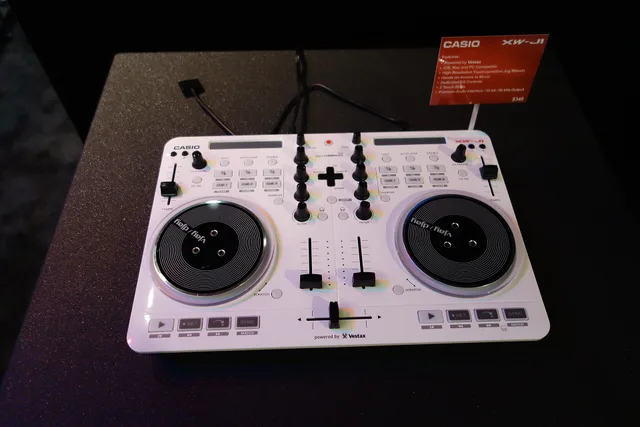
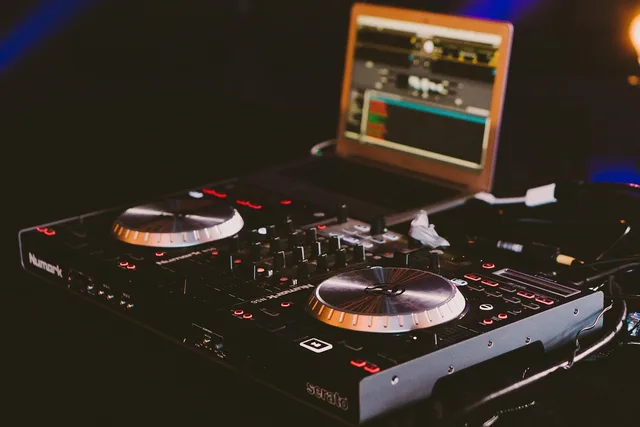
- Controllera second unit from the same family, so the library and the mapping load unchanged.
- Laptopa second machine with the same software version and the same library.
- Cablesone spare USB cable, one spare XLR pair, one spare RCA pair, one spare 1/4-inch cable, kept in the same case.
- Power patha second power strip, a spare IEC cable for each powered item, and a longer extension cord rated for the load.
The rule: the spare is tested within 30 days and swaps in under two minutes.
Crowd flow and the alcohol context
A DJ reads a room for a living, but crowd safety at a licensed venue sits with the venue and its staff. Your job is to keep the floor clear of cable runs, keep the booth accessible, and stop the set if a situation needs the house team.
Alcohol changes the room. A crowd that is drinking moves differently, requests differently, and stays later. Build the last hour into the rate card as overtime rather than absorbing it, and agree with the venue who calls the end of the night.
Three costs under every booking
Three costs sit under every gig: music licensing, insurance, and gear wear. Licensing is the one DJs miss, because the venue's own licence may not cover your set. Gear wear is a set percentage of each fee.
The IRS starting a business page covers structure, tax IDs, and recordkeeping. Sole proprietor, LLC, partnership, or an S corporation election (Form 2553): the choice, whether a subcontractor DJ is an employee or a contractor, and how Form 1099-NEC, Schedule C, and quarterly estimated tax payments apply, are questions for a CPA.
The SBA business guide covers planning, launch, permits, insurance, and finance at the general level. The BLS page on meeting and event planners describes the buyer on the other side of your quote: they scope the event, solicit bids, inspect venues, and review bills under deadline pressure.
A worked month
The figures are illustrative. Use your own.
| Bookings in the month | Count | Fee each | Total |
|---|---|---|---|
| Weeknight bar sets | 4 | $300 | $1,200 |
| Saturday weddings | 2 | $1,800 | $3,600 |
| Corporate event | 1 | $1,400 | $1,400 |
| Private party | 1 | $700 | $700 |
| Month gross | 8 | $6,900 |
Variable costs: travel $240, attendant pay $600, allocated licensing and insurance $160, gear fund at 5 percent of fees $345. Total $1,345. Contribution is $5,555, about $694 a booking. Fixed monthly costs are $3,200 for the gear loan, insurance premium, storage, software, and phone, which the month's contribution covers. Break-even sits at five bookings, and the month closed three bookings above break-even.
Common questions
Does a streaming subscription cover a wedding?
No. A personal listening subscription does not license a paid public performance. The composition side runs through a performing rights organization such as ASCAP, BMI, SESAC, or GMR, and the recording side through the label or distributor.
How much liability cover does a venue want?
The figure is set by the venue and its counsel, and it varies by room and by market. A common requirement in the United States is $1M per occurrence with a $2M aggregate. Ask for the requirement in writing, then have your insurer confirm your policy meets it.
Can I play past the contracted end time?
Only if the contract states an overtime rate and a block length, and the client approves it on the night. Agree the rate before the event, not at 1 a.m.
Who decides if the music is too loud?
The city sets the decibel limit and the measurement point, and the venue enforces it on site. Your local licensing office states what applies to the address.