Guides
Should You Charge a DJ Setup Fee? A Rate Breakdown
A DJ setup fee covers labour, not gear. Here is what setup and teardown actually cost to deliver, with illustrative US ranges per gig, plus travel time.
What to take away
- A DJ setup fee is a labour line item, not an equipment charge. The gear is a capital cost you recover elsewhere.
- Most US solo DJs spend 60 to 120 minutes on load-in, setup, and soundcheck, and 45 to 90 minutes on teardown, per event.
- Illustrative pricing runs $75 to $150 for a simple one-room setup and $250 to $600 for multi-room, outdoor, or union-crew events.
- Itemised quotes win work with planners, because they can compare your labour against another vendor's labour.
- Setup labour is deductible as an ordinary business expense when you document the hours and the miles.
What the figure covers
A setup fee pays for time, not hardware. It covers the crew's arrival, unloading, cable runs, speaker placement, mixer and controller checks, microphone testing, and the teardown that happens after the last song.
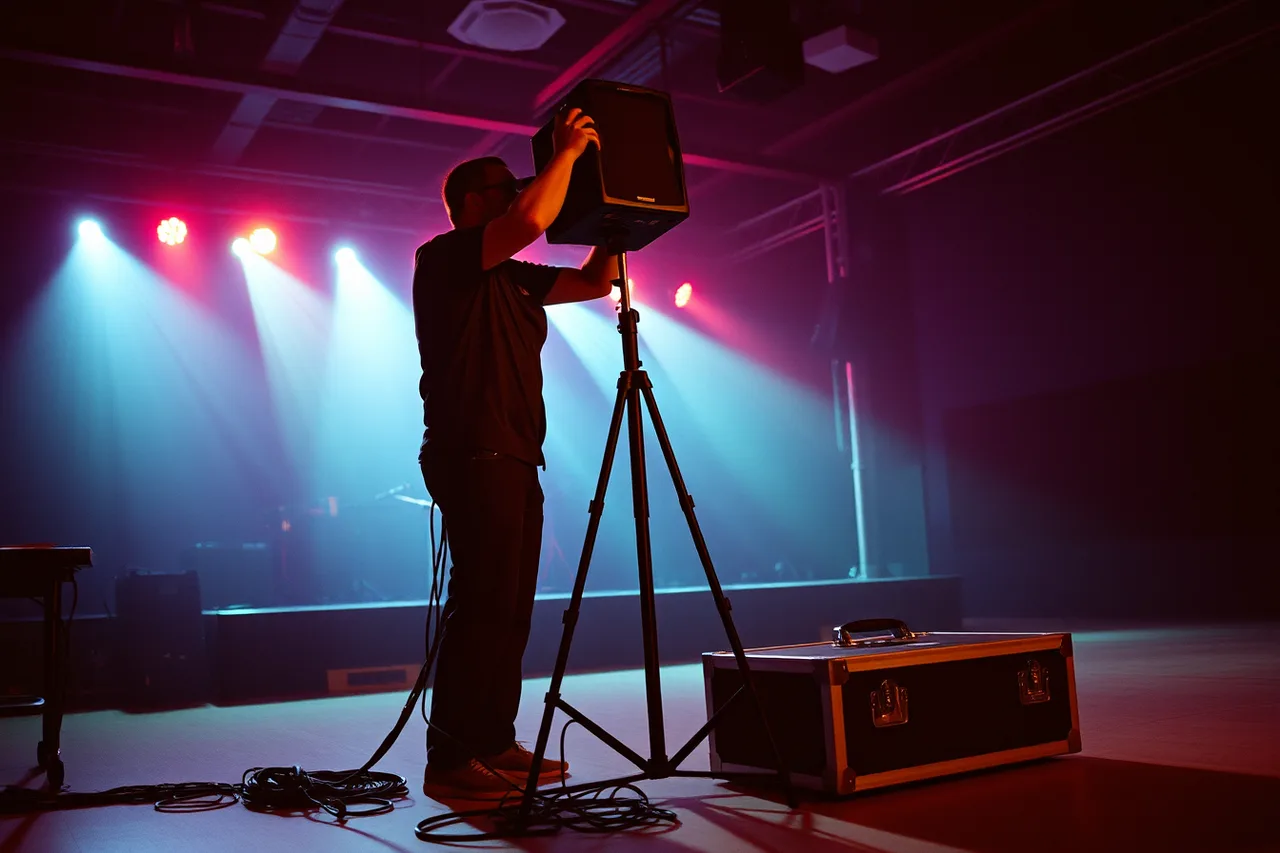
It also covers the unpaid time most DJs forget to count: the drive to the venue, the wait for a room to clear, and the second trip when a planner moves the ceremony outside. Those hours are real, and they come out of your margin.
Line by line
The table below shows illustrative US ranges for a single-operator DJ working a 4 to 6 hour event. Treat them as planning figures, not quotes from a survey.
| Cost line | Low | High | Notes |
|---|---|---|---|
| Load-in and setup labour | $50 | $120 | 1 to 2 hours at $50 to $60 per hour |
| Teardown labour | $40 | $90 | 45 to 90 minutes, often after midnight |
| Assistant or second operator | $0 | $200 | Needed for multi-room or 300+ guest events |
| Vehicle and mileage | $15 | $60 | IRS standard mileage rate applies to the round trip |
| Consumables (tape, ties, batteries) | $5 | $25 | Replaced most gigs |
| Total setup fee | $110 | $495 | Before any performance fee |
The mileage line is the one owners skip. The IRS treats the drive to a gig as a deductible business expense, and the standard mileage rate is published each year in Publication 463. If you drive 40 miles round trip, that is a real cost you can bill or absorb, but not ignore.
What scale changes
Batch size, in this business, means the number of rooms and the number of guests. One room with one system is the baseline. Two rooms doubles the setup labour, not the fee.
A 150-guest wedding with a ceremony system, a cocktail system, and a reception system is three setups in one day. That is 3 to 4 hours of labour before the first dance, and it justifies a fee at the top of the range.
A 40-guest backyard party is one setup, 45 minutes, and a fee near the bottom. Charging the same flat setup fee for both is how owners lose money on the big jobs and lose bookings on the small ones.
What is easy to forget
- The venue's load-in window. Some buildings allow trucks only between 8am and 10am.
- Union crew requirements. A steward may insist on running cable, which adds a labour charge you cannot bill as your own.
- Power access. A 100-foot run to the nearest outlet adds 15 minutes and a cable you may not own.
- Parking and dock fees, which are common in downtown hotels.
- The teardown curfew. Some venues fine vendors who are still loading out after a set hour.
A setup fee that does not name the load-in window and the teardown curfew is an estimate, not a price.
Where the margin actually goes
Setup labour is the easiest line to price and the easiest to give away. Owners fold it into the performance fee, then discount the package, and the labour disappears first.
Itemising protects it. A planner comparing two quotes can see that one DJ charges $150 for setup and another charges nothing, and will ask what the difference buys. That question is your opening, and it closes more work than a lower total.
For a worked example, a DJ quoting a 200-guest wedding at $1,800 for performance plus a $400 setup fee is not more expensive than a DJ quoting $2,100 flat. The itemised quote simply shows where the money goes, which is what corporate and hotel planners now expect.
Keep the records. Setup hours, mileage, and consumables are deductible, and the IRS explains which business expenses qualify on its deducting business expenses page. A one-page log per gig is enough.
If you hire a second operator for large events, classify them correctly before you pay them. The IRS criteria for independent contractors versus employees are set out in Publication 15-A, and misclassification is a costly error to unwind.